The Price on the Forecourt Is the Wrong Number to Compare
When most people compare an electric vehicle to a petrol car, they compare sticker prices. It is the wrong calculation. The sticker price is one payment made once. The total cost of ownership — fuel, insurance, maintenance, depreciation, financing, and taxes — is paid continuously over five years and tells a completely different story.
An electric vehicle costs $10,000–$15,000 more to buy than an equivalent petrol car at point of purchase. Over five years of typical driving, that premium is largely or fully recovered through lower running costs. In many markets and usage scenarios, the EV is cheaper over five years in total — not just cheaper to run, but cheaper in aggregate — particularly where government incentives reduce the purchase price gap.
This article gives you the honest five-year total cost of ownership comparison, the variables that determine which side of the line your situation falls on, and the one number that most EV cost analyses get wrong.
For context on the broader home energy picture — including whether pairing an EV with home solar or a heat pump changes the numbers further — see our analyses on [Home Solar Panels: Real Payback Period by Region] and [Heat Pumps vs Gas Boilers: The 10-Year Financial Duel].
The Full Cost Framework
A genuine total cost of ownership comparison covers six cost categories. Here is how EV and petrol compare across each:
Purchase price: EVs cost more upfront — typically $10,000–$15,000 more before incentives for comparable vehicles. After available government incentives, this gap narrows significantly. In the US, the federal tax credit historically reduced this gap by $7,500; verify current availability as this has changed in 2025–2026. In the UK, company car tax advantages and local schemes apply. In Morocco, EV incentives are growing under the national energy transition programme.
Fuel cost: This is where EVs recover their upfront premium. The average cost of driving 100 miles in a petrol car at current fuel prices is approximately $12–$16. In an EV charged at home on a standard tariff, the same 100 miles costs $3–$5. If charged during off-peak overnight rates, it drops to $2–$3. Over 15,000 miles annually, this difference compounds to $1,200–$2,000 per year.
Maintenance: EVs have significantly fewer moving parts than petrol engines — no oil changes, no spark plugs, no timing belts, no exhaust systems. Independent analysis consistently finds EV maintenance costs 30–40% lower than equivalent petrol vehicles. Over five years, this represents a saving of $2,000–$4,000 for the average driver.
Insurance: Currently running 10–20% higher for EVs than equivalent petrol cars in most markets, driven by higher repair costs for battery-adjacent components and lower insurer familiarity with the technology. This premium is narrowing as EVs become more common and insurer data improves.
Depreciation: This is the most volatile variable and the one most EV analyses handle poorly. Early EV models depreciated rapidly as technology improved quickly. More recent mainstream EVs from established manufacturers are showing depreciation rates comparable to petrol equivalents. Battery health — the primary depreciation driver unique to EVs — is now well understood, with most modern batteries retaining over 80% capacity after ten years.
Financing: On a higher-priced vehicle, financing costs more in absolute terms even at the same interest rate. This is a real cost that belongs in the comparison.
The Five-Year Total Cost of Ownership
Here is the consolidated five-year comparison for a typical family-sized vehicle driven 15,000 miles annually in the US market:
| Cost Category | Petrol Car | Electric Vehicle |
| Purchase price (after incentives) | $32,000 | $37,000–$42,000 |
| 5-year fuel cost | $10,500 | $2,750 |
| 5-year maintenance | $6,500 | $3,900 |
| 5-year insurance premium | $8,500 | $9,500–$10,500 |
| 5-year total cost of ownership | $57,500 | $53,150–$60,150 |
The EV range straddles the petrol equivalent — the financial outcome depends significantly on local electricity tariffs, available incentives, driving patterns, and specific vehicle choice. But the headline that EVs are categorically more expensive to own over five years is, for most buyers in most markets, no longer accurate.

The Variable Nobody Includes: Home Charging Infrastructure
The one cost that most EV total cost of ownership analyses omit is home charging installation.
A standard three-pin plug charge is free to install but slow — adding roughly 8 miles of range per hour. For daily commuting this is adequate. For frequent longer journeys it is not.
A dedicated home wallbox charger costs $500–$1,500 installed and adds 20–30 miles of range per hour, making overnight charging practical and reliable for almost any daily usage pattern. This is a one-off cost that belongs in the five-year ownership calculation, and most analyses quietly leave it out.
Add it. It is still recoverable within the fuel saving window, but it shifts the payback point by two to four months and should be part of your honest assessment.
The Battery Question Everyone Asks
Battery degradation is the most common concern raised by people considering an EV — and it is the area where public perception lags furthest behind the actual data.
Real-world battery analysis across large EV fleets consistently shows less than 2.5% capacity loss per year on average for modern lithium-ion battery packs under normal usage. After ten years of typical use, the average EV retains over 80% of its original range. Most manufacturers now offer 8-year, 100,000-mile battery warranties covering degradation below 70% capacity.
The scenario of a battery requiring expensive replacement within five years — which dominates public anxiety about EVs — is not supported by the population-level data on batteries manufactured from 2020 onwards. It was a real concern for first-generation EVs. It is not a meaningful risk for current mainstream models.
How Home Solar Changes the EV Equation
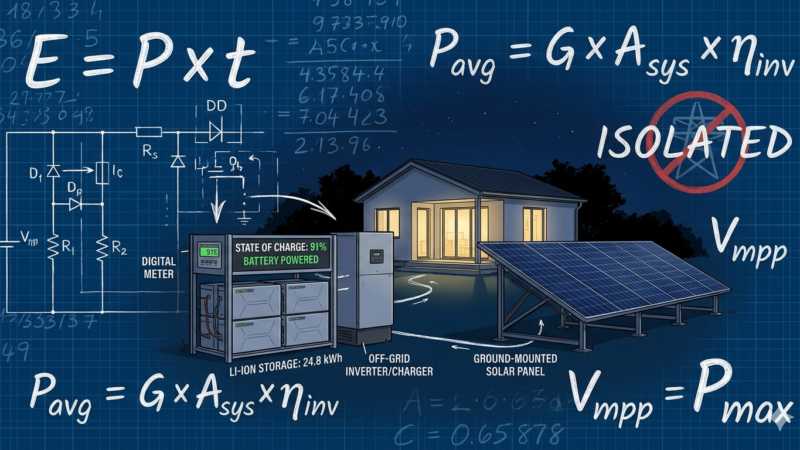
If you charge an EV predominantly from home solar panels, the fuel cost per mile drops to near zero for daytime and stored solar electricity. Over five years at 15,000 miles annually, this eliminates approximately $2,750 in electricity costs from the EV side of the comparison — making the EV total cost of ownership decisively lower than petrol in almost every market scenario.
The combination of home solar and an EV is currently one of the highest-return household energy investments available, with the two systems reinforcing each other financially. For the full solar analysis by region see our article on [Home Solar Panels: Real Payback Period by Region]. For the equivalent analysis applied to home heating, see [Heat Pumps vs Gas Boilers: The 10-Year Financial Duel].
The Verdict
The EV premium at point of purchase is real. The five-year total cost of ownership tells a more nuanced story — one in which the EV either breaks even with or undercuts the petrol equivalent for most drivers in most markets, depending on local electricity costs, available incentives, and annual mileage.
The EV makes clear financial sense if: you drive more than 10,000 miles annually, you can charge at home on a standard or off-peak tariff, you have access to purchase incentives that reduce the acquisition cost gap, and you are keeping the vehicle for five or more years.
The petrol car remains pragmatic if: you drive fewer than 8,000 miles annually and the fuel saving never compounds significantly, you have no home charging access and rely entirely on public charging at higher rates, or you need to replace a vehicle immediately with no time to assess incentive eligibility properly.
The break-even point for most buyers who charge at home and drive typical annual mileage is approximately 4.5 to 5 years. Beyond that point, the EV is generating a net financial return on its purchase premium every month it remains on the road.
Frequently Asked Questions (FAQs)
For most drivers who charge at home and drive more than 10,000 miles annually, yes. The upfront premium of $10,000–$15,000 is largely recovered through fuel savings of $1,200–$2,000 per year and maintenance savings of $400–$800 per year, with a typical break-even point of 4.5 to 5 years.
Approximately $3–$5 per 100 miles on a standard home tariff in the US, or $2–$3 on an off-peak overnight rate. Compared to $12–$16 per 100 miles for a typical petrol car at current fuel prices, the annual saving for a 15,000-mile driver is $1,200–$2,000.
For modern EVs manufactured from 2020 onwards, no — this risk is not supported by the population-level data. Real-world fleet analysis shows average battery capacity loss of less than 2.5% per year, with most vehicles retaining over 80% capacity after ten years. Most manufacturers cover degradation below 70% capacity under an 8-year, 100,000-mile warranty.
EVs eliminate oil changes, spark plug replacement, timing belt service, exhaust system maintenance, and transmission servicing — none of which apply to battery electric vehicles. Independent analysis consistently places EV maintenance costs 30–40% below equivalent petrol vehicles over five years, representing a saving of $2,000–$4,000 for the average driver.