The Answer We Gave You Before? Why the Data Has Changed:
In our earlier analysis of [Home Solar Panels: Real Payback Period by Region], we concluded that battery storage extends your payback period significantly and is only justified in specific circumstances. That was accurate in 2024. In 2026, the picture has shifted enough that the conclusion deserves a serious scientific revisit.
Battery prices have fallen 15 to 20% since 2024 and are continuing downward. Policy changes across the United States, particularly California’s NEM 3.0, have structurally altered the economics of solar without storage in ways that make batteries considerably more valuable than they were two years ago. Virtual Power Plants are now paying homeowners real money to let utilities borrow their stored electricity during grid peaks. And Lithium Iron Phosphate chemistry has matured to the point where a quality home battery now reliably lasts 16 or more years under daily use.
The old conclusion — battery storage is an expensive half-measure — is no longer universally true. But it is not universally false either. The correct answer in 2026 is more nuanced, more regional, and more dependent on your specific situation than any blanket recommendation can capture. This article gives you the framework to work out which side of the line you fall on.
What a Home Battery Actually Does and What It Does Not
Before the financial analysis, it is worth being precise about the technology, because there is a persistent gap between what home batteries are marketed to do and what they actually deliver.
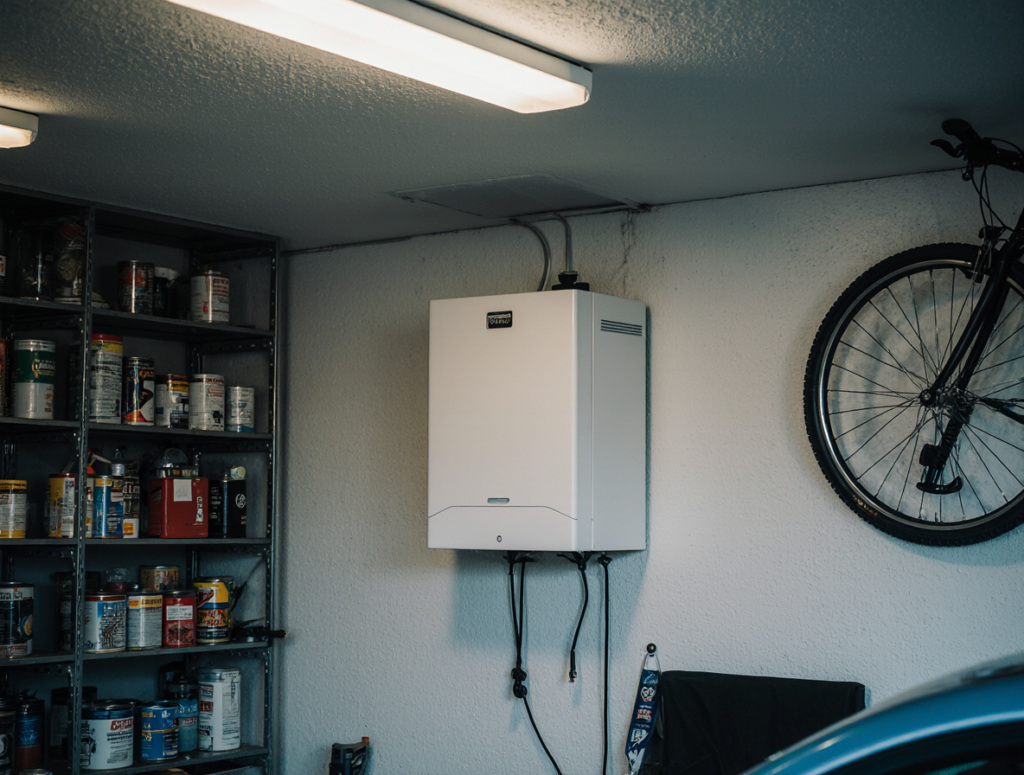
A home battery system stores surplus electricity generated by your solar panels during the day and releases it for household use when the panels are not producing, typically from late afternoon through the night. The system has three core components: the battery cells themselves, a Battery Management System (BMS) that monitors cell health and controls charging and discharging, and an inverter that converts the DC electricity stored in the battery into the AC electricity your home appliances actually use.
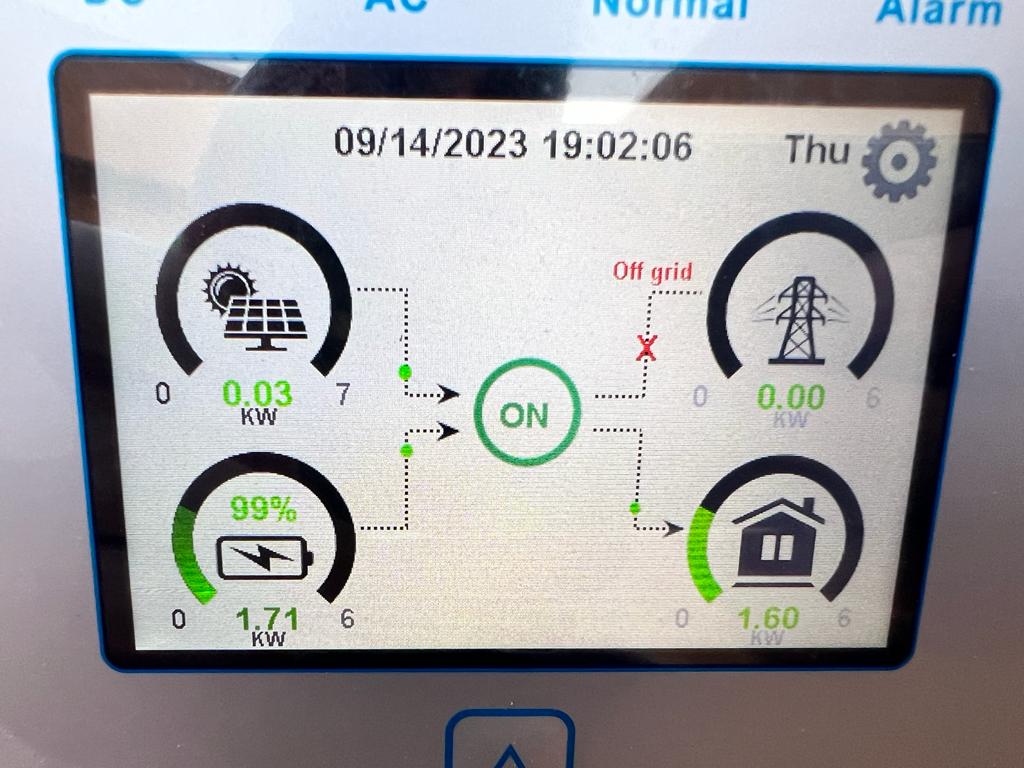
What most homeowners discover after installation is the first important limitation. In a standard grid-tied installation, if the grid goes down, your battery goes dark too. This is a deliberate safety feature designed to prevent electricity from feeding back into the grid while engineers are working on it. To maintain power during an outage you need a system with a specific backup or island mode function, and not all battery and inverter combinations support this. Before purchasing any system with blackout protection as a primary motivation, confirm explicitly that the specific hardware combination supports full backup mode rather than assuming it.
The second limitation concerns the relationship between battery size and seasonal solar production. In summer a well-sized solar system on a typical US home generates 20 to 30 kWh per day, far more than a standard 10 to 13 kWh battery can store. In winter the same system may generate only 6 to 12 kWh daily, often less than the battery capacity. A battery sized for summer surplus sits partially empty most of the year. A battery sized for winter production struggles to justify its cost. This seasonal mismatch is one of the most overlooked challenges in residential battery economics, and most installer quotes are built on summer production figures.
The Battery Chemistry You Need to Understand Before Buying Anything
In 2026 there are three battery chemistries relevant to residential solar storage. Understanding the difference takes five minutes and will determine whether your system lasts a decade or two.
Lithium Iron Phosphate (LFP) is the current industry standard for home storage and the chemistry Green Budget Lab recommends without reservation for residential use. LFP cells have a thermal runaway threshold above 270°C, compared to roughly 150°C for older chemistries, making them the safest residential battery available. Their cycle life is exceptional, typically 4,000 to 6,000 full charge-discharge cycles with premium cells rated above 8,000. Cycling once per day, a 6,000-cycle LFP battery lasts over 16 years. They contain no cobalt or nickel, which reduces both cost and supply chain risk. The trade-off is slightly lower energy density than competing chemistries, meaning LFP batteries are physically larger for the same storage capacity — relevant if space is constrained.
Nickel Manganese Cobalt (NMC) was the dominant home storage chemistry before LFP matured. NMC offers higher energy density — useful where physical space is limited — but its thermal runaway threshold of around 150°C makes it significantly less safe than LFP. Cycle life is typically 2,000 to 4,000 cycles, or roughly half that of premium LFP. NMC cells cost approximately 20% more than equivalent LFP for the same capacity. In 2026, with LFP now fully cost-competitive and widely available, there is no compelling reason to choose NMC for a new residential installation. Avoid it.
Sodium-Ion (Na-ion) is the emerging chemistry generating significant industry attention. Sodium is vastly more abundant than lithium, theoretically reducing costs dramatically once production scales. Current Na-ion cells deliver 100 to 160 Wh/kg energy density, lower than LFP’s 150 to 200 Wh/kg, with cycle life currently at 2,000 to 4,000 cycles. One genuine advantage: Na-ion performs better than LFP in extreme cold, retaining more capacity at temperatures as low as -20°C, which matters for northern US states, Canada, and Germany. Current pricing is roughly on par with LFP due to limited production scale, with costs expected to drop to approximately $42 per kWh as manufacturing scales. For a 2026 installation, LFP remains the safer and more economical choice. Na-ion is worth watching for a 2028 purchase decision.
| Chemistry | Cycle Life | Thermal Safety | Energy Density | Cost vs LFP | Verdict |
|---|---|---|---|---|---|
| LFP | 4,000–8,000 | Excellent (270°C) | 150–200 Wh/kg | Baseline | Buy this |
| NMC | 2,000–4,000 | Moderate (150°C) | 200–300 Wh/kg | +20% | Avoid for home |
| Sodium-Ion | 2,000–4,000 | Good | 100–160 Wh/kg | Similar | Watch for 2028 |
How to Size Your Battery: The Formula That Actually Works
Oversizing a battery is one of the most common and expensive mistakes in residential solar storage. It is driven almost entirely by installer incentives — a larger system means a larger sale — and it results in thousands of dollars of capacity that sits idle for months at a time.
The correct sizing methodology starts not with what your panels produce, but with what your home consumes after the sun goes down.
Step 1: Calculate your evening and overnight consumption. Look at your electricity bill and find your monthly kWh figure. Divide by 30 to get your daily average. Your battery needs to cover roughly 40 to 60% of that figure — the portion you consume after sunset. For a typical US home using 30 kWh daily, that means 12 to 18 kWh of evening consumption.
Step 2: Apply the Depth of Discharge adjustment. LFP batteries can safely be used to 80 to 100% of their rated capacity. A 13.5 kWh LFP battery delivers approximately 12 to 13.5 kWh of usable energy. This is significantly better than older lead-acid batteries, which should only be discharged to 50% of rated capacity, effectively halving their usable storage.
Step 3: Apply the sizing formula.
Required Battery Capacity = (Evening kWh Need) ÷ (Battery DoD) × 1.15 (efficiency buffer)
For a home needing 10 kWh after sunset with an LFP battery at 90% DoD:
10 ÷ 0.90 × 1.15 = 12.8 kWh minimum capacity
A single 13.5 kWh unit is the correct size. A second unit is unnecessary expenditure for this household.
Step 4: Check power output, not just capacity. A 13.5 kWh battery rated at 5 kW continuous output cannot simultaneously run a 3.5 kW air conditioner and a 2.5 kW oven, even though the stored energy is sufficient. Power output — measured in kilowatts — determines what you can run simultaneously. Capacity — measured in kWh — determines how long you can run it. Both numbers matter and both should appear in any serious quote.
Step 5: Size for winter, not summer. Your solar system produces 50 to 70% less electricity in December than in July. A battery sized on summer production figures will underperform for six months of the year. Use your winter monthly bill figures for the sizing calculation, or add a 30% buffer to your result.

The Financial Reality in 2026: Three Regional Case Studies
Case Study 1: California, USA (The Market Where Batteries Now Make Sense)
California’s NEM 3.0 policy, which came into full effect in 2023 and now governs all new solar installations, fundamentally altered the economics of solar storage in the state. Under NEM 3.0, the credit earned for exporting surplus solar electricity to the grid during midday dropped to approximately $0.05 to $0.08 per kWh. The cost of importing that same electricity from the grid during peak evening hours is $0.40 to $0.52 per kWh. That spread of up to $0.45 per kWh is the financial engine that makes California batteries viable.
A homeowner with a 10 kWh battery charging during low-cost midday solar production and discharging during peak evening hours captures that arbitrage daily. Annual savings from this time-of-use strategy alone reach $730 to $876, according to analysis of SCE TOU-D rate structures. After the 30% federal Investment Tax Credit reducing a $11,500 system to approximately $8,050, plus available local rebates, payback periods for well-positioned California households now sit at 4 to 8 years. For high electricity users in Southern California, that number drops to under four years.
California in 2026 is the clearest case globally where batteries have shifted from optional to financially essential for new solar installations.
Case Study 2: Texas and the Southeast USA (The Reliability Play)
Texas presents a different but equally compelling case. The ERCOT grid’s documented instability — evidenced by Winter Storm Uri in 2021 and subsequent weather events — has elevated backup power from a financial calculation to a genuine resilience priority for millions of households. In Florida, the US Energy Information Administration consistently records among the longest average outage durations of any state, driven by hurricane-season weather events.
In these markets the financial arbitrage argument is weaker than in California, because electricity tariffs are lower and time-of-use rate structures are less aggressive. A Texas household might see annual bill savings of $400 to $700 from a battery system, pushing payback periods to 10 to 14 years on savings alone. However the value of avoided outage costs, particularly for households with medical equipment, home offices, or food storage vulnerable to extended power loss, is real and quantifiable even if it does not appear on a utility bill.
For Texas and Southeast homeowners, the honest framing is: a battery is a resilience investment with a financial return, not primarily a financial investment with a resilience bonus. That distinction matters for how you evaluate the purchase.
Case Study 3: Germany and France (Europe’s Time-of-Use Arbitrage Window)
Germany and France both present strong theoretical cases for battery storage driven by some of the highest residential electricity tariffs in the developed world, at €0.28 to €0.38 per kWh. The challenge, as our solar panel article established, is the low sun hours of Northern Europe limiting how much surplus solar energy is available to store in the first place.
A well-insulated German home with a 6 kW solar system and a 10 kWh LFP battery, on a dynamic tariff that allows off-peak charging at low rates, can generate annual savings of €800 to €1,200. At that saving rate and after applicable incentives, payback periods of 8 to 12 years are achievable — financially marginal over a 16-year battery lifespan but improving every year as electricity prices continue rising and battery costs continue falling.
The German and French cases are also being transformed by Virtual Power Plant participation, where utilities pay homeowners to allow brief controlled discharges during grid stress events. VPP revenue in active European markets is shortening payback periods by 2 to 3 years for participating households.
The Variable Nobody Quotes You: AC vs DC Coupling
When adding a battery to an existing solar system — rather than installing both together from scratch — you will encounter a choice between AC-coupled and DC-coupled systems. The difference has a direct financial impact that most installers do not surface clearly.
In a DC-coupled system, solar panel output flows directly into the battery before being converted to AC. This eliminates one conversion step and delivers round-trip efficiency of 94 to 97%. DC coupling is the optimal choice for new installations where panels and battery are installed simultaneously.
In an AC-coupled system, solar panel output is first converted to AC by the solar inverter, then converted back to DC for battery storage, then converted to AC again for household use. Each conversion loses energy. Round-trip efficiency drops to approximately 85 to 90%, meaning 10 to 15% of your stored solar energy is lost to conversion before you use it. For an existing solar installation being retrofitted with a battery, AC coupling is typically simpler and cheaper to install despite the efficiency penalty. For a brand new installation, there is no technical reason to accept the AC efficiency penalty.
Over a 16-year battery lifespan, the efficiency difference between AC and DC coupling on a 10 kWh system at current California electricity rates represents approximately $2,000 to $3,500 in lost value. That figure deserves to appear in every honest battery quote for a new installation.
What Specifications to Demand From Any Battery Quote
Green Budget Lab does not endorse specific brands. What we endorse is knowing exactly which numbers to demand from any installer before signing anything.
Usable capacity in kWh, not total capacity. A battery marketed as 13.5 kWh with a 90% depth of discharge delivers 12.15 kWh usable. That is the number that determines how long your lights stay on.
Cycle life at rated depth of discharge. Manufacturers quote cycle life under specific test conditions. Demand the cycle count at the DoD you plan to operate at. A battery rated for 6,000 cycles at 80% DoD may only deliver 4,000 cycles at 100% DoD. The warranty should cover at least 10 years and guarantee no less than 70% capacity retention at end of warranty period.
Continuous power output in kW. As established in the sizing section, this determines what you can run simultaneously. For whole-home backup ambitions, look for 7.6 kW or higher continuous output. For essentials-only backup, 5 kW is typically sufficient.
Round-trip efficiency. Demand a minimum of 92% round-trip efficiency for any new installation. Below 90% is unacceptable for a DC-coupled new build system.
Operating temperature range. Batteries installed in garages in Texas face summer temperatures above 40°C. Batteries in Minnesota face winter temperatures below -10°C. Both extremes affect performance and longevity. Verify that the specified operating range matches your climate.
Backup capability confirmation in writing. If blackout protection matters to you, get written confirmation from your installer that the specific inverter and battery combination supports full backup island mode, not just partial circuit backup.
The Honest Verdict: When to Buy, When to Wait
Our previous analysis concluded that battery storage was only justified in specific circumstances. The updated 2026 position is more differentiated.
Buy now if: you are a new solar installation in California under NEM 3.0 — batteries are financially near-essential and payback has compressed to 4 to 8 years for most households. You live in a high-outage region such as Florida or Texas and value resilience independently of ROI. You are on a time-of-use electricity tariff with a significant peak-to-off-peak price spread. You are participating or eligible to participate in a Virtual Power Plant program in your utility area.
Wait 12 to 18 months if: you have an existing solar system not on NEM 3.0 and your utility still offers reasonable export credits. Battery prices are continuing to fall and waiting could improve your economics meaningfully. You are in a low-electricity-cost state where bill savings alone produce payback periods beyond 15 years.
Do not buy if: your primary motivation is 100% energy independence — no residential battery system achieves this reliably through a northern hemisphere winter without a backup generator. You are being quoted a system significantly larger than the sizing formula in this article suggests — oversizing adds cost without proportionate benefit.
The financial case for batteries is genuinely stronger in 2026 than it was in 2024. It is not, however, universally strong. The difference between a good battery investment and an expensive one still comes down to your electricity tariff, your local grid reliability, your solar system’s export terms, and whether you size the system on your real evening consumption rather than your installer’s optimistic summer production figures.

Key Takeaways
- Battery prices have fallen 15 to 20% since 2024 — the economics are meaningfully better than two years ago
- LFP chemistry is the only defensible choice for residential storage in 2026 — avoid NMC, watch sodium-ion for 2028
- Size your battery on evening consumption, not total daily use — most households need 10 to 15 kWh, not more
- California under NEM 3.0 now has payback periods of 4 to 8 years — batteries have shifted from optional to near-essential there
- DC coupling beats AC coupling by 5 to 12% efficiency — demand DC for any new installation
- Virtual Power Plants are shortening payback periods by 2 to 3 years in active markets — ask your utility if you are eligible
- Demand these numbers from every quote: usable kWh, cycle life at operating DoD, continuous kW output, round-trip efficiency, and written backup mode confirmation
- Do not overbuy — a correctly sized 10 to 13.5 kWh system outperforms an oversized one financially in almost every scenario
Frequently Asked Questions (FAQs)
This is one of the most urgently searched questions right now because the answer changed. For new homeowner-installed residential systems, the federal Residential Clean Energy Credit is not available for property placed in service after December 31, 2025. However third-party ownership models including leases and Power Purchase Agreements may still access commercial credits under Section 48E, with savings potentially passed on through lower rates. Several states have stepped in with their own programmes to partially fill the gap. California, New York, Texas through the Oncor rebate of up to $9,000, and North Carolina through Duke Energy’s PowerPair programme of up to $9,000 in combined solar and battery rebates all offer meaningful incentives that can still significantly reduce your net system cost. Always verify current eligibility with your utility or a qualified tax professional before making any financial assumptions, as rules vary by location and change frequently.
The length of time your battery will power your house during an outage depends on how many batteries you have and which appliances you choose to back up. Typically a single battery can keep essentials like your refrigerator, lights, and internet running for 12 to 24 hours. Add air conditioning at 1,500 watts and that runtime drops to approximately 4 hours on a standard 10 kWh system. The practical answer for most households is that a single 10 to 13.5 kWh battery covers one night of essential loads comfortably. If your solar panels can recharge the battery the following day, a well-sized system sustains you through multi-day outages indefinitely as long as there is sufficient sunlight. The critical word in every outage conversation is essentials. A battery sized for whole-home backup including HVAC and electric cooking requires 20 to 30 kWh or more, typically two or three units, and costs accordingly.
Yes, in many cases you can retrofit battery storage to an existing solar system. Whether that is simple or more complex depends on your current inverter design and whether the battery is being added as an AC-coupled or DC-coupled solution. If your existing system has a standard string inverter, adding a battery almost always requires AC coupling, which introduces a 10 to 15% efficiency penalty from the additional power conversion steps. If your existing system has a hybrid inverter already installed, DC coupling is possible and delivers significantly better round-trip efficiency. Before getting any retrofit quote, identify exactly which inverter you currently have. That single piece of information determines your coupling options, your efficiency outcome, and a significant portion of your installation cost. Compatibility between your existing inverter and a new battery is not guaranteed and must be confirmed in writing before signing any contract.
Not always, and this surprises more homeowners than any other battery discovery after installation. Check that the specific inverter and battery combination supports EPS (Emergency Power Supply) or full backup mode. In a standard grid-tied installation without backup functionality, your battery shuts down when the grid goes down as a safety measure to prevent electricity feeding back to engineers working on the lines. To keep your home powered during an outage you need a system explicitly configured with backup or island mode. Some systems offer whole-home backup switching automatically within milliseconds of a grid failure. Others offer only partial circuit backup covering pre-selected essential circuits. The difference between these two configurations can be thousands of dollars in additional hardware. If blackout protection is your primary motivation for buying a battery, specify this requirement clearly before any quote is prepared and confirm backup capability in writing before signing.
In 2026, a typical 13.5 kWh home battery system costs around $15,228 before any incentives, translating to approximately $1,128 per kWh. After available state incentives this figure drops meaningfully depending on your location. Whether it is worth it depends on three variables your installer will rarely volunteer upfront. First, what electricity tariff are you on — time-of-use rates with a significant peak-to-off-peak spread make batteries considerably more valuable than flat-rate tariffs. Second, what are your solar export terms — under NEM 3.0 the 75% reduction in export credits creates a strong financial incentive to self-consume stored solar rather than export it, the primary economic driver for battery adoption in California in 2026. Third, how often does your grid go down — in high-outage regions the resilience value adds real financial worth that does not appear on a utility bill calculation. Run the sizing formula in this article before accepting any installer’s payback projection. An oversized system on an optimistic summer production estimate is the single most common reason battery investments underperform expectations