Tuesday Morning: The Hot Water Stops
It’s 7 AM. Your teenage daughter is in the shower. You hear her yell: “Dad, there’s no hot water!”
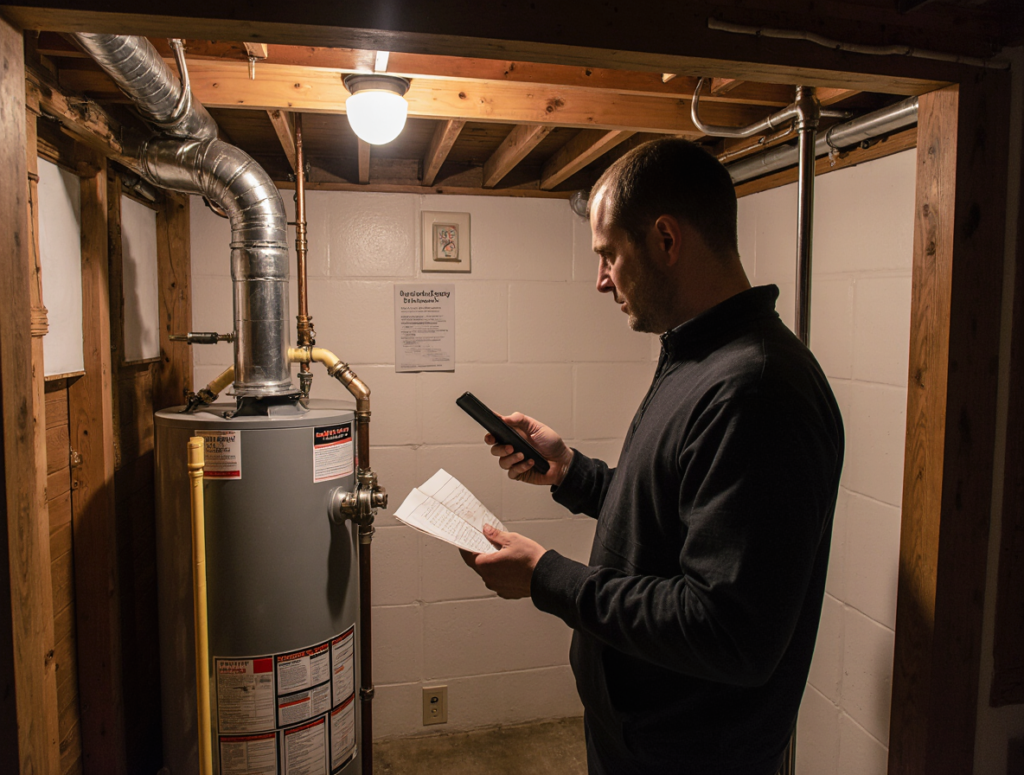
You rush to the basement. The water heater—a 12-year-old gas unit—is leaking pooling water across the floor.
A plumber arrives by noon. The verdict: dead. Repair won’t work.
“I can install a new gas unit today,” he says. “Tank, venting, permits… about $1,400 total. You’re looking at maybe 3 PM. Your family has hot water by dinner.”
You have three kids. Evening showers are happening. You’re tempted to say yes.
But something stops you.
You’ve been reading about solar panels and wondering about your home’s energy efficiency. You’ve done the ROI math on other upgrades. You know there might be a smarter option than replacing it with an identical unit.
You ask the plumber: “What about a heat pump water heater?”
He looks confused. “Those are… more expensive. And they’re slow.”
He’s right on expensive. But you have two hours before his afternoon jobs. You pull out your laptop and do the actual math.
The Numbers: Gas vs Heat Pump
Option 1: New Gas Water Heater
Upfront cost: $1,400 installed (today)
Your current gas bill: You check your last three months. Average: $120/month, but half goes to heating the house. Water heating portion: roughly $50–$60/month = $600–$700 per year.
Maintenance: Annual flushing ($150). Anode rod replacement every 3 years ($250). Rough average: $150/year.
Lifespan: 10–12 years before it dies and you’re back where you are now.
15-year total cost:
- Equipment: $1,400
- Gas: $700 × 15 = $10,500
- Maintenance: $150 × 15 = $2,250
- Total: $14,150
This is your baseline. You’re replacing like-for-like.
Option 2: Heat Pump Water Heater
You start researching. Heat pump water heaters exist. They’re not common in your area, but they’re becoming standard in California, Canada, and increasingly across the US.
How they work: Instead of burning gas, a heat pump pulls heat from the surrounding air and pumps it into the water. It’s like a refrigerator working backwards.
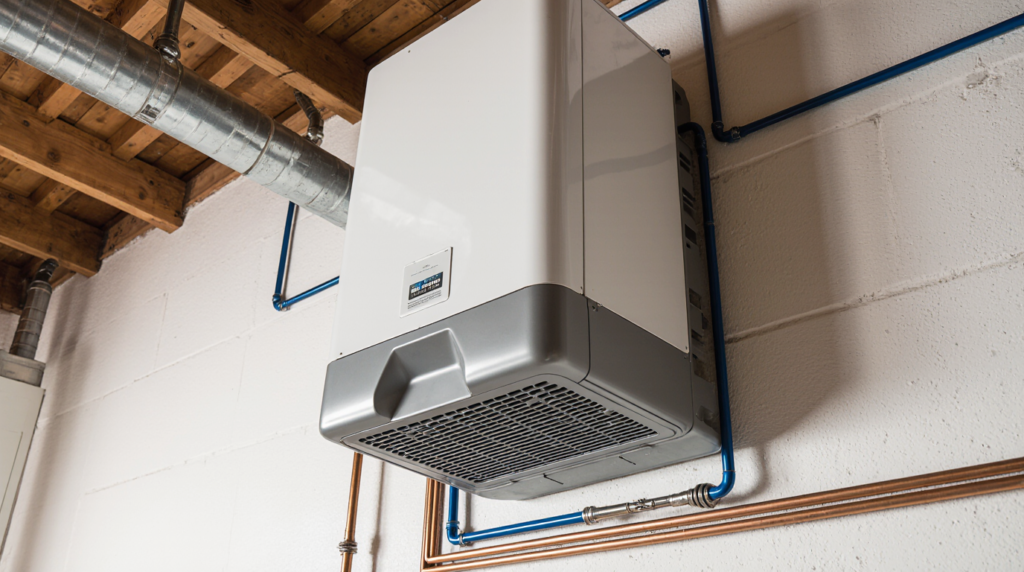
Upfront cost: You call three HVAC contractors. Heat pump units run $1,500–$1,800. Installation labor is more complex than gas (proper venting, electrical work): add $600–$800. Total: $2,300–$2,600 installed.
Your electrician says your 200-amp panel can handle it. No $2,000 panel upgrade needed. You’re relieved.
Your electricity bill: Currently $140/month. You pull up detailed usage. Peak is summer AC. Winter heating uses more gas than electricity. Your baseline electricity (before HPWH) is roughly $100–$110/month = $1,200–$1,320/year.
How much will HPWH add? A heat pump water heater uses 2,500–3,500 kWh/year for water heating. At your local rate ($0.14/kWh), that’s $350–$490/year.
Total new electricity bill: $1,200 + $400 = $1,600/year.
Maintenance: Minimal. Air filter cleaning (DIY). Occasional coil cleaning if hard water ($150, every 2–3 years). Average: $50–$75/year.
Lifespan: 13–15 years. Compressor is the failure point. Rare, and usually covered by warranty to 10 years.
15-year total cost:
- Equipment: $2,500 (midpoint)
- Electricity: $420 × 15 = $6,300
- Maintenance: $65 × 15 = $975
- Total: $9,775
The Payback Question: Which One Saves You Money?
Gas: $14,150 over 15 years Heat pump: $9,775 over 15 years
Savings with heat pump: $4,375 over 15 years.
But more importantly: When does it break even?
- Gas unit costs: $1,400 upfront
- Heat pump costs: $2,500 upfront
- Additional investment: $1,100
Annual gas savings (gas bill minus electricity bill): $700 – $420 = $280/year
Maintenance savings (lower maintenance): negligible difference
Payback period: $1,100 ÷ $280 = 3.9 years
In less than 4 years, the heat pump pays for the extra upfront cost. After that, it’s pure savings for the remaining 11 years.
You sit back. This changes the decision.
But Wait: There’s a Catch (Cold Climates)
You live in the Midwest. Winters get cold.
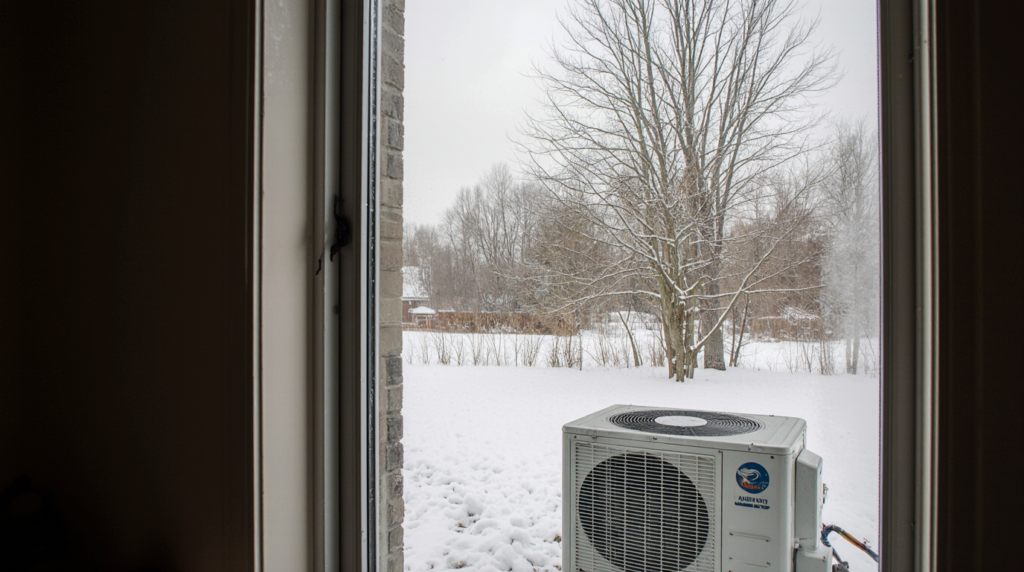
You do more research. Heat pump water heaters work fine in mild weather. But as outdoor temperature drops below 50°F, their efficiency decreases. Not dramatically, but noticeably.
A contractor explains: “In winter, the COP drops from 3.5 down to about 2.5. That means less heat moved per kilowatt of electricity.”
What does this mean for your payback?
In winter months, your heat pump needs more electricity to maintain the same hot water. This eats into your savings margin.
You recalculate with a hybrid model (some heat pump, some electric resistance backup):
- Summer: Pure heat pump ($25/month electric for water)
- Winter: Hybrid mode ($40/month electric for water, better than pure resistance but less efficient than summer)
- Average annual: $420/year → $480/year
Revised payback: $1,100 ÷ ($700 – $480) = $1,100 ÷ $220 = 5 years
Still better than gas long-term. But your payback extends from 4 years to 5 years.
This matters if you’re planning to move in 5 years (you break even right before leaving—no benefit). But if you’re staying 10+ years, it’s still the better choice.
The Real Decision
You realize this comes down to one question: Are you staying 5+ years?
- Staying 10+ years? Heat pump wins. $4,000+ in lifetime savings, plus 75% fewer emissions.
- Might move in 5–7 years? Either option works. Heat pump saves money if you stay the full 5 years.
- Might move soon (1–3 years)? Gas is safer. You break even on a gas unit faster because there’s no payback period to recover.
You check your mortgage situation. You’re planning to stay. Two kids are in middle school. The house has room for future projects. You’re not moving.
Heat pump it is.
One More Thing: Can You Speed This Up?
The plumber said heat pump units are “slow.” True. They take 2–4 hours to heat cold water to your setpoint, compared to gas’s 1–2 hours.
This matters on Monday morning when three kids shower back-to-back.
The solution: Many heat pump units come in “hybrid” mode. During peak demand, they automatically switch to electric resistance heating (like electric baseboard heat, but built into the tank). This gives you fast recovery.
Trade-off: hybrid mode costs $200–$300 more and uses more electricity during peak hours.
You decide hybrid is worth it. One teenage daughter’s complaints about shower water temperature will cost less than $200.
What You Tell the Plumber (and What It Costs)
You call back at 1 PM.
“Don’t install the gas unit. I want a hybrid heat pump water heater instead.”
Plumber: “Uh… I can order one. Costs more. Takes 3–4 days. You’ll need a temporary solution for showers.”
You arrange an Airbnb stay 15 minutes away for 4 nights (cost: $400). Installation happens Friday. By Saturday morning, you have hot water.
New timeline:
- Gas option: $1,400 equipment, hot water by 3 PM Tuesday
- Heat pump option: $2,500 equipment + $400 hotel = $2,900 total, hot water by Saturday
But over 15 years:
- Gas: $14,150
- Heat pump: $9,775
- Net savings: $4,375
The 4-day inconvenience and $400 hotel cost are recovered in 1.5 years of energy savings.
You do it.
Three Months Later: The Reality Check
Winter arrives. You monitor your electricity bill.
Water heating adds exactly what the calculations predicted: $35–$45/month in winter, $20–$25/month in summer.
Your gas bill drops from $50–$60 to nearly zero (just cooking).
The hybrid mode kicks in twice—cold January mornings when all three kids shower before school. The auxiliary heating keeps hot water flowing. No complaints about temperature.
The basement is quieter. The heat pump compressor hums at night (like a refrigerator), but it’s not loud.
One thing surprises you: In mild weather (spring/fall), water heating costs only $10–$15/month for electricity. The heat pump efficiency is even better than predicted.
Your energy monitoring app (you installed one to track solar panels you’re considering) shows water heating now uses just 6% of your total household electricity. It was eating 8% of your gas bill before.
Mental math check: You’ve saved roughly $180 in the first winter (vs. what a gas heater would have cost). At this rate, you’ll hit payback in 5–6 years, then save $300+/year forever.
What You Learned (And What Matters)
- Payback period beats upfront cost. Don’t buy the cheapest option today. Buy the option that costs least over 15 years.
- Cold climates reduce efficiency, but not ROI. Your payback extended by 1 year (4→5 years), but it’s still positive.
- Hybrid mode solves the “slow hot water” problem. Worth the extra $200–$300.
- Integration matters. If you eventually install solar panels, daytime water heating can run on that free solar electricity. This multiplies your ROI.
- Maintenance is invisible but real. Your new system needs almost no attention. Gas would’ve needed flushing, anode rod replacement, eventual repair. Heat pump is set-and-forget.
The Numbers That Matter (That You’ll Forget in a Week)
Save this:
| Gas | Heat Pump | |
|---|---|---|
| Upfront | $1,400 | $2,500 |
| Annual Operating | $700 | $420 |
| Annual Maintenance | $150 | $50 |
| Payback (extra cost) | N/A | 5 years |
| 15-year total cost | $14,150 | $9,775 |
| Lifetime savings | — | $4,375 |
Should You Do This?
Yes, if you’re staying 5+ years.
Maybe, if you might move in 5 years (you break even right at the end; no margin for error).
No, only if you move within 2–3 years. Then stick with gas.
One Final Thing: What About Solar Thermal?
You briefly read about solar thermal water heaters (panels on the roof that directly heat water with sunlight).
In theory, amazing ROI. Zero fuel costs.
Reality: $10,000–$15,000 installed, maintenance is complex (glycol fluid replacement, pipe freeze risk), and your winter performance is terrible (20% of annual output comes in winter when you need it most).
Payback: 15–30 years depending on climate.
You skip it. Heat pump + future solar panels is smarter than solar thermal alone.
The Install Day (Friday)
Contractor shows up. Removes old gas tank. Installs heat pump unit (it’s about the size of a dishwasher, vertically mounted).
New 240V electrical circuit runs to the unit. Venting is simple (exhaust air stays in basement, no external venting needed—heat pump doesn’t produce exhaust fumes).
Drain line to floor drain.
Thermal storage tank (insulated, sitting behind the unit) is filled and pressurized.
Total time: 4 hours.
By evening, water heater is set to 120°F. By Saturday morning, your daughter showers without complaint.
The Takeaway (Read This If You Skipped Everything Else)
Your old gas water heater costs you $14,150 over 15 years.
Replacing it with a heat pump water heater costs $9,775 over 15 years.
You save $4,375 by paying more upfront.
That payback happens in 5 years. After that, you’re saving $300–$400 every year for the next 10 years.
If you’re staying 5+ years, this is an obvious choice. If you might move soon, stick with gas.
Everything else—efficiency metrics, thermal coefficients, technical specs—is noise. These are the only numbers that matter.
Related Articles (If You Want to Dig Deeper)
Heat Pump vs Gas Boiler: The 10-Year Savings Verdict – If you’re also replacing your furnace, heat pump HVAC + heat pump water heating creates massive synergy.
Home Solar Panels: Real ROI by Region – Water heating powered by solar electricity is the ultimate efficiency combo. Read this if you’re considering both upgrades.
Electrical vs Petrol Car: The True 5-Year Total Cost of Ownership in 2026 – If you’re upgrading electrical infrastructure for both EV charging and heat pump water heater, coordinate the work. One electrician visit beats two.
Frequently Asked Questions (FAQs)
Air-source: Pulls heat from surrounding air. Most common (90%). Cheaper ($2,000–$2,500). Works down to -10°F.
Ground-source: Pulls heat from buried pipes. Rare for water heating. Expensive ($5,000+). Constant temperature = better efficiency in extreme climates.
For homes: Air-source is the practical choice. Ground-source is overkill.
Manufacturing produces ~0.5 metric tons CO₂. You offset this in about 2 years of operation vs. gas.
By year 15, net environmental benefit is massive.
About 75% less over 15 years (depending on your local electricity grid mix).
In the US grid average: Gas produces ~6 metric tons CO₂ over 15 years. Heat pump produces ~1.5 metric tons.
In regions with renewable electricity (California, Pacific Northwest, Canada): 80–90% reduction.
Combination systems (boiler + water) are common in Europe and Canada.
If that’s your case, replacing just the water heating part becomes complex. Get a specialized contractor.
Often, full electrification (new heat pump for space + new HPWH) makes more sense than partial conversion.
Probably not. If it’s working fine, keep it.
Only replace when:
- It breaks
- It’s 8+ years old and starting to fail
- You’re doing major renovations
Early replacement doesn’t pay off unless your gas bill is exceptionally high.
Still Have Questions?
This covers 95% of common questions. If you have something unusual, your HVAC contractor can answer.
The key is: Don’t make this decision in a panic when your heater breaks. Do the math first. Heat pump almost always wins if you’re staying 5+ years.