The Bamboo Boom and What the Marketing Leaves Out
Walk into any health food store or scroll through any sustainable living website and bamboo paper towels are positioned as the obvious upgrade, natural, fast-growing, and guilt-free. They cost around 30% more than regular paper towels, and their packaging typically features reassuring words like “sustainable,” “natural,” and “chemical-free.”
The data does not support the premium.
A 2020 lifecycle assessment found that bamboo paper towels generate 20% more carbon per roll than standard wood-pulp paper towels. They cost more to buy, more to produce, and depending on where you live, significantly more to ship. This article explains why, and points to the option that actually delivers on the environmental promise bamboo makes.
What Turning Bamboo Into Paper Actually Involves
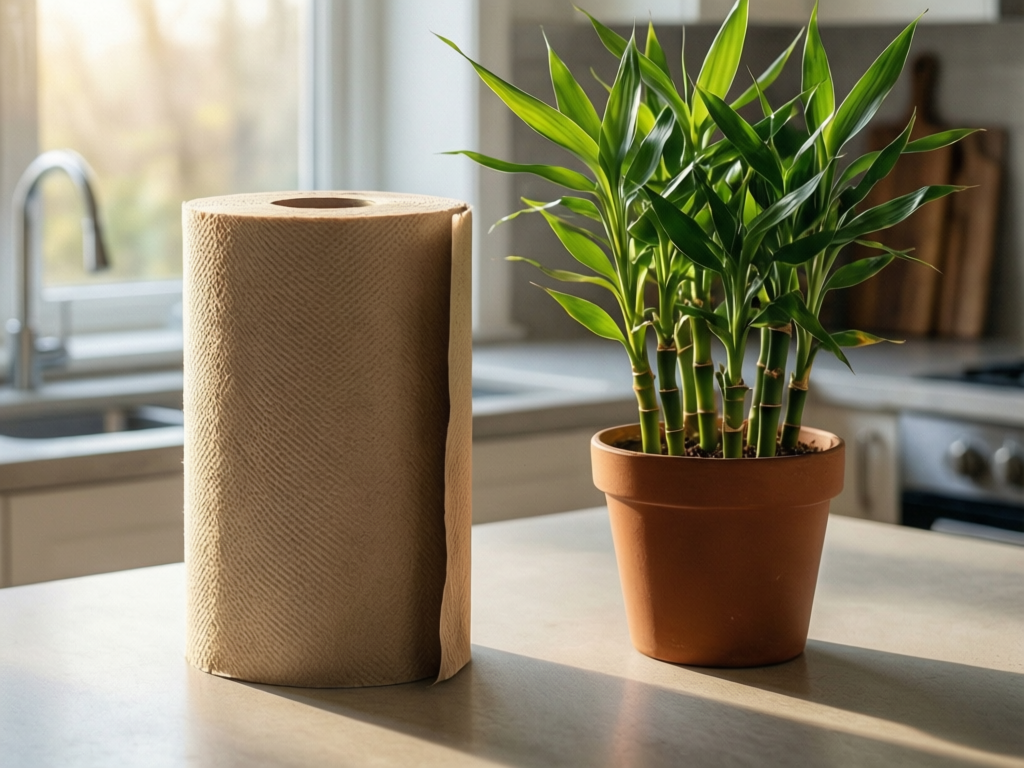
The appeal of bamboo as a raw material is genuine. It is one of the fastest-growing plants on the planet, requires no replanting after harvest, needs far less water than trees, and can be grown without pesticides. As an agricultural input, bamboo has real environmental advantages over virgin wood pulp.
The problem is what happens next.
Converting hard bamboo stalks into soft, absorbent paper towel requires a chemically intensive industrial process known as viscose pulping. This process uses carbon disulfide and sodium hydroxide to dissolve the bamboo fibres into a workable pulp. The US Federal Trade Commission has repeatedly fined bamboo product manufacturers for claiming their products are “chemical-free”, because the viscose process makes that claim factually impossible. The finished product retains none of the chemical inputs, but the production process generates them as waste regardless.
The agricultural benefits of bamboo as a crop are real. The environmental benefits of bamboo as a processed paper product are largely not.
The One-Year Cost Comparison
Here is what each option costs an average household over a single year:
| Metric | Regular Paper Towels | Bamboo Paper Towels |
| Annual cost | $195.00 | $260.00 |
| Deforestation impact | High | Low |
| Carbon footprint per roll | 0.05 kg CO₂e | 0.06 kg CO₂e |
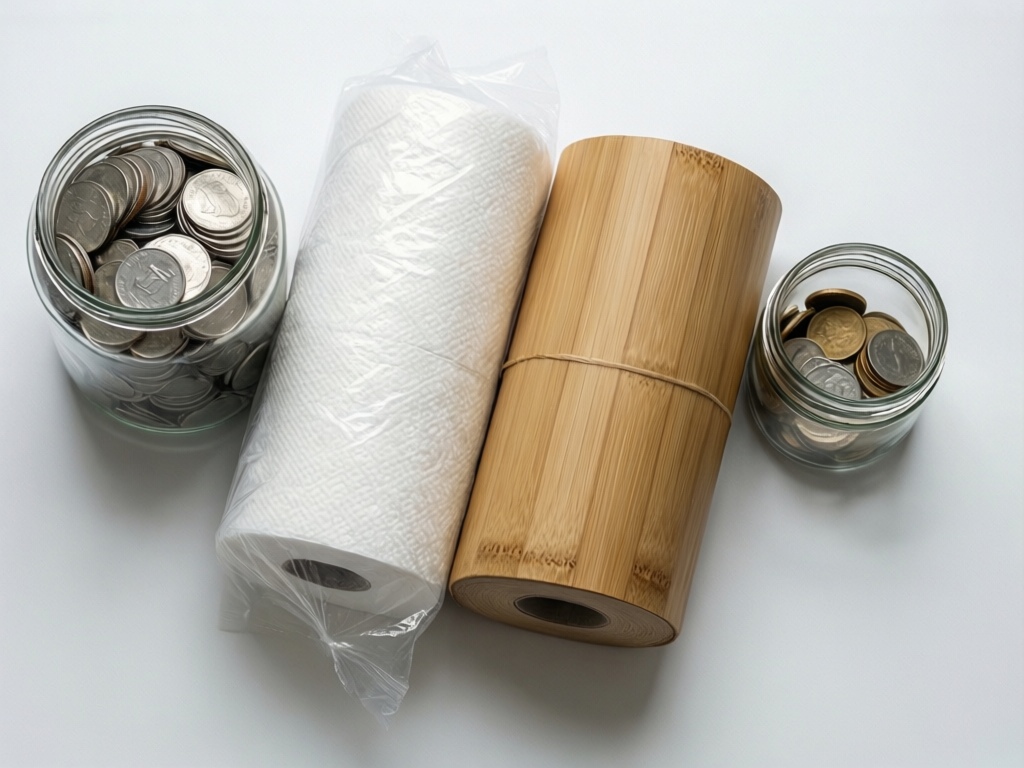
Bamboo paper towels cost $65 more per year than regular paper towels and generate more carbon per roll. For a household switching to bamboo in the belief they are making a sustainable choice, the financial and environmental outcome is the opposite of what the packaging implies.
The Science Behind the Carbon Numbers
A 2020 study from the University of British Columbia measured the lifecycle carbon footprint of common paper towel materials. The findings were clear:
- Regular wood-pulp paper towels: 0.05 kg CO₂e per roll
- Bamboo paper towels: 0.06 kg CO₂e per roll
- 100% post-consumer recycled paper towels: 0.03 kg CO₂e per roll
Bamboo’s higher carbon footprint relative to regular paper is driven by two factors. First, the viscose chemical pulping process is more energy-intensive than standard wood-pulp processing. Second, and more significantly, virtually all bamboo is grown and processed in Asia. Shipping heavy paper products from China or Vietnam to North America or Europe adds a substantial carbon penalty that the fast-growing crop cannot offset.
Bamboo solves a real problem, deforestation, while creating a different one. It is a meaningful improvement in one dimension and a step backward in another.

The Option That Actually Wins
The sustainable paper towel that almost no marketing budget promotes is 100% post-consumer recycled paper. It generates just 0.03 kg CO₂e per roll; 40% less than regular paper towels and 50% less than bamboo. It requires no virgin raw material, no chemical pulping of agricultural crops, and in most cases no long-distance shipping from Asia.
Recycled paper towels do not have the visual appeal of bamboo packaging or the word “natural” printed on the front. They are, however, the genuinely lower-carbon disposable option for households that are not yet ready to eliminate paper towels entirely.
If you are currently buying bamboo paper towels in the belief that you are making the most sustainable disposable choice available, switching to 100% recycled paper will reduce your carbon footprint per roll and lower your annual spend simultaneously.
How They Compare in Actual Use
In controlled absorbency testing, premium bamboo paper towels performed identically to premium wood-pulp paper towels. There is no functional advantage to bamboo in practical household use, the same task requires the same number of sheets, and both end up in the bin.
This matters because the entire value proposition of bamboo paper towels rests on environmental credentials rather than performance. If those credentials are weaker than the marketing claims, and the data shows clearly that they are; there is no remaining basis for the price premium.
Both bamboo and regular paper towels are single-use items that go to landfill after one use. Neither degrades meaningfully in anaerobic landfill conditions. The most honest description of bamboo paper towels is an expensive product with a slightly better agricultural origin story and a worse carbon outcome.
The Verdict: What to Buy Instead
Bamboo paper towels are a textbook case of greenwashing, not necessarily deliberate, but structurally inevitable when a product’s marketing leads with agricultural credentials while obscuring industrial processing and shipping realities.
Do not pay the bamboo premium. The carbon outcome is worse than regular paper, and significantly worse than recycled paper.
If you are buying disposable paper towels, buy 100% post-consumer recycled paper towels. They are cheaper than bamboo, lower carbon than both alternatives, and widely available.
If you are open to eliminating paper towels from your household entirely, Swedish dishcloths are the most financially and environmentally compelling alternative. A single Swedish dishcloth replaces approximately 17 rolls of paper towels, is machine washable, biodegradable, and lasts for months of daily use. A pack of several costs less than a month of paper towels and eliminates the category from your shopping list almost entirely.
The goal is not to find the most sustainable disposable. The goal is to stop needing disposables.
Key Takeaways
- Bamboo paper towels generate 20% more carbon per roll than regular paper towels due to chemical processing and long-distance shipping
- They cost approximately $65 more per year than regular paper towels with no performance advantage
- 100% recycled paper towels generate 0.03 kg CO₂e per roll, the lowest carbon footprint of any disposable option
- The FTC has repeatedly fined manufacturers for labelling viscose bamboo products as “chemical-free”
- Swedish dishcloths replace up to 17 rolls of paper towels each and are the highest-ROI swap in this category
- Do not pay a green premium for a product with a worse carbon outcome than the cheaper alternative
Frequently Asked Questions (FAQs)
No, based on current lifecycle data. A 2020 University of British Columbia study found bamboo paper towels generate 0.06 kg CO₂e per roll compared to 0.05 kg CO₂e for regular paper towels. The chemical processing required to convert bamboo into soft paper and the long shipping distances from Asia both contribute to a higher carbon footprint than the natural origin of bamboo would suggest.
Bamboo paper towels carry a green premium based on their agricultural credentials — bamboo grows faster than trees and requires fewer pesticides. However the processing and shipping costs of bamboo paper are higher than those of locally produced wood-pulp paper, and those costs are passed on to the consumer without a corresponding environmental benefit
If you are currently buying bamboo paper towels for environmental reasons, switching to 100% recycled paper towels is a straightforward improvement — lower carbon, lower cost, and no compromise on performance. If you are open to eliminating paper towels from your kitchen entirely, Swedish dishcloths offer significantly greater financial and environmental savings than any disposable alternative
A Swedish dishcloth is a compostable, machine-washable cloth made from a cellulose and cotton blend. Each one replaces approximately 17 rolls of paper towels and lasts for several months of daily use. A pack of several costs less than a month of paper towels and eliminates the need for disposable paper towels almost entirely, making it the highest-return swap in this product category.
100% post-consumer recycled paper towels generate only 0.03 kg CO₂e per roll — the lowest carbon footprint of any disposable paper towel currently available. They require no virgin raw material and in most markets involve significantly shorter supply chains than bamboo imported from Asia.